Muscle in the Morning, June 19, 2013
LATEST ARTICLES FOR JUNE 2013

by Charles Poliquin
Certain foods are packed with massive amounts of nutrients that help you achieve a lean and muscular physique. Eating these superior foods won’t save you from a poor diet or regular over eating, but they can give that extra boost when trying to get lean, while feeling energized throughout the day.
Did you know that there are numerous plants and nutrients that can have a dramatic effect on fat loss? This list only includes the most promising nutrients that support fat loss in multiple ways. I favor nutrients that can be simply added to your diet rather than supplemented, although in certain cases it’s worth it to use a more concentrated extract or supplement form.
Read the rest of this article »

Charles Poliquin
The response to the blogs has been phenomenal. Thanks to all of you who share them across the World. Today we are going to look at the typical executive that comes in to my office for a consult.
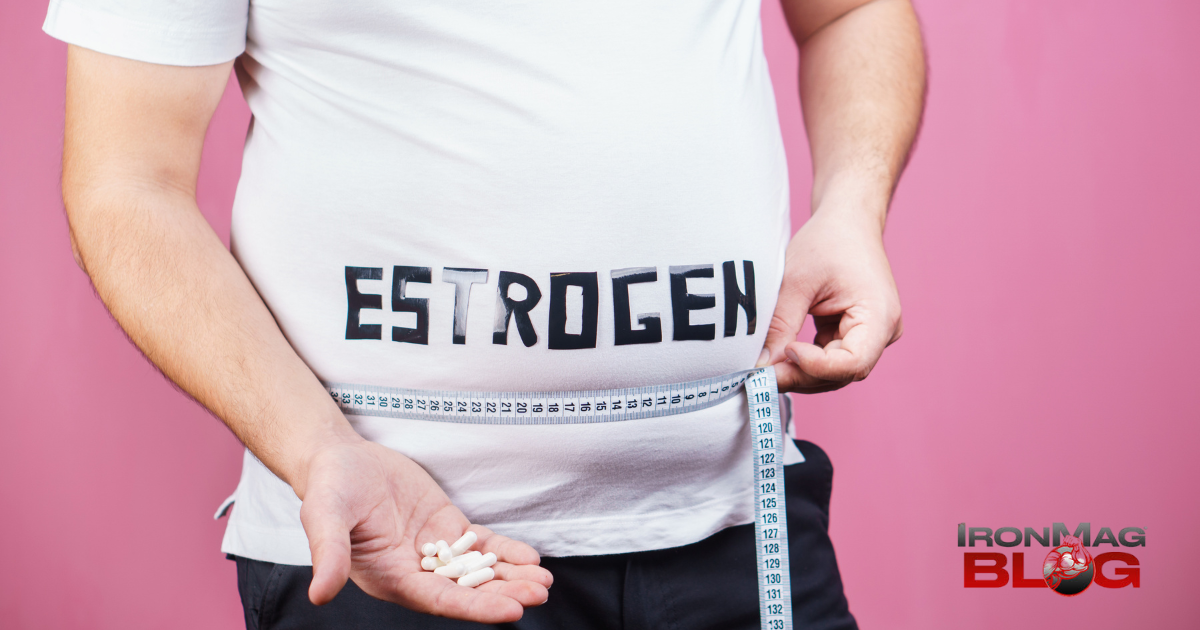
This executive has such rampant estrogens that he now squats to pee, and has substituted shopping for ice hockey night. To conserve his identity, we will just call OFME for Over Feminized Male Executive.
CP: Where are you from and what do you do?
OFME: Originally I am from Saskatchewan, but I am know the major partner in a law firm in downtown Toronto.
CP: Saskatchewan? That province is so flat that if your dog runs away from home, you can see it for a week.
Read the rest of this article »

Pharmaceutical companies Acceleron Pharma and Shire have put the myostatin inhibitor ACE-031 on hold. They made an announcement about this in a joint press release recently [acceleronpharma.com May 2, 2013]. A strange development, as a few weeks previously Muscle & Nerve published a study that shows that ACE-031 is stuff that anyone who considers themself to be a chemical bodybuilder would be happy to be able to afford.
Injectable ACE-031 – an underground example is shown above – is a synthetic activin receptor type IIB. Muscle cells have this receptor too: it’s intended for proteins like myostatin, GDF11 and activin A and B. If myostatin attaches itself to an activin receptor type IIB, then the growth of muscle fibres is inhibited. Under the ‘right’ conditions myostatin actually breaks down muscle.
Read the rest of this article »

by Tom Venuto
Running can kill you! Or so say the latest round of anti cardio articles. It started (again) late last year with the much-publicized mainstream reports of a study which warned about possible heart damage from too much prolonged endurance training (such as hours of running at a time). Since, then, I’ve seen the blog-o-sphere ramp up with more and more anti-running and anti-cardio articles. A diet guru says running is bad for you and you should never do it. A medical doctor (another one) says marathon runners are going to drop dead of heart attacks, and a strength coach slams cardio, saying lifting weights and a little bit of sprint or burst training is all anyone should ever do. What a bunch of clowns….
sHere are some big problems with all these anti-running arguments
One is that strength and lifting coaches are taking what is good advice for their athletes and generalizing it to the whole world. Mistake.
Two, is that people, even medical doctors, are misreading or misreporting research and statistics about (rare) deaths during endurance events. Mistake.
Three, bodybuilding and diet “gurus” are making stuff up and writing controversial articles just to get attention. (clowns!)
Four… endurance athletes are doing exactly what endurance athletes are supposed to do! And some people just like to run! Let them, and mind your own training business!
Read the rest of this article »

by Mike Arnold
Ever since revolutionizing the market in 1998, PDE-5 inhibitors have impacted American culture in ways that could not have initially been foreseen. Originally released for the treatment of erectile dysfunction, it did not take long for the general public to realize that this class of drugs had applications outside of those indicated for the target demographic. Within a short period of time, their accepted use expanded to include performance enhancement as well as the medical treatment of ED. No longer viewed an “old man’s” drug, the social stigma attached to these compounds was lifted and in the process, their use permeated nearly every sector of society.
Instead of elaborating on the numerous potential applications of PDE-5 inhibitors in the general population, I want to shift focus and discuss the unique challenges a steroid-using BB’r might face and how these drugs can assist in overcoming them. One issue common to the steroid user, when utilizing particular AAS, is that of sexual dysfunction.
Read the rest of this article »

by Charles Poliquin
Strength training builds muscle. Lifting heavy stuff makes you stronger. By training with a certain volume and intensity, you can produce a significant release of the hormones, growth hormone (GH), testosterone, and insulin-like growth factor (IGF-1). It’s been widely accepted that this hormone response promotes muscle building. Recent evidence shows it may not be so!
A close look at research from the past five years shows that even though there are numerous associations between these hormones and hypertrophy, contradictions abound. For example, a series of studies from a Canadian research group have found that although testosterone, GH, and IGF-1 promote growth in certain situations, the post-exercise hormone response does not influence protein synthesis or hypertrophy.
Read the rest of this article »

by Charles Poliquin
Interval sprints during a recent PICP Level 3 course at the PSI in East Greenwich,RI.Know that you have complete control over what you put in your mouth. No one ever ate anything by accident.
Muggings by donuts who force themselves into your stomach are a figment of your imagination.
Belly fat loss is about the following:
• Intensity and volume of training—you must train with a near maximal metabolic intensity and perform a large volume of work
• Decreasing inflammation in the body and enhancing the immune system
• Managing stress and decreasing the body’s output of the hormone cortisol
• Creating a healthy gut, which leads to lower cortisol and less inflammation
• Managing insulin health and glucose tolerance with diet and regular physical activity
• Elimination of foods that you are intolerant of
• Elimination of foods that are wholly unhealthy
Read the rest of this article »


Growth Hormone & Insulin – Part 2
Tips To Improve Sleep So You Can Lose Fat & Build Muscle