
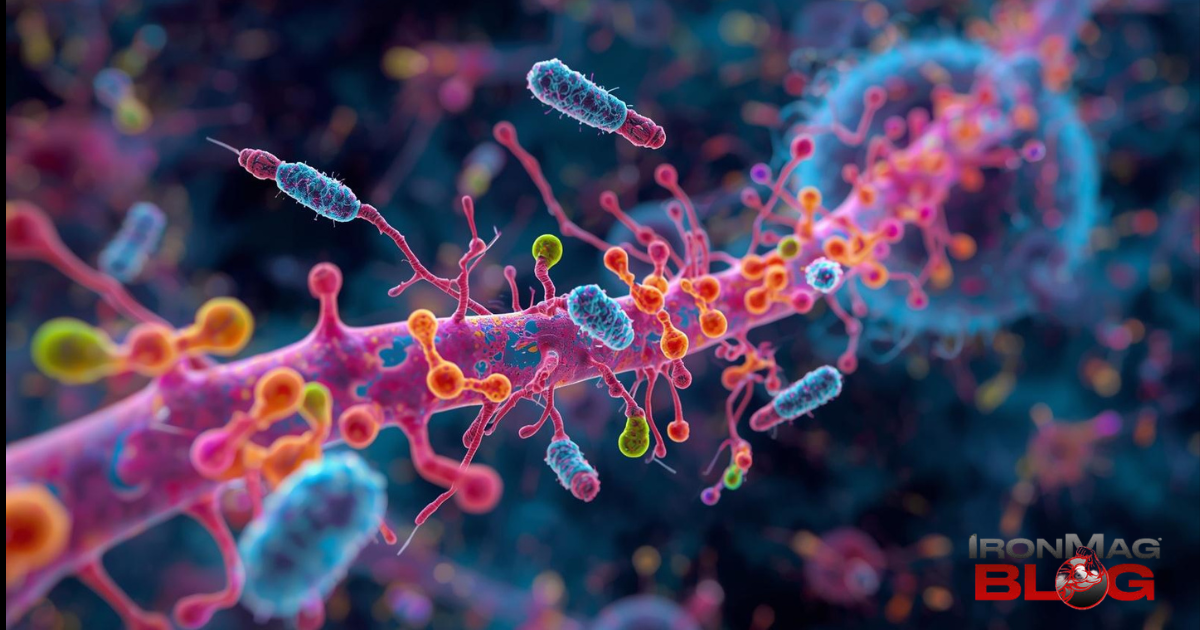
For years, researchers have talked about the “gut-brain axis.” In fact, it’s something that I’ve published an article on in the past. It’s the idea that your digestive system and brain constantly communicate with each other.
But a new study published in PLOS Biology suggests that the connection between your gut and brain might be even more direct than we thought.
In fact, the research found that gut bacteria may physically travel from the gut to the brain. The whole concept is pretty wild when you think about it.
In this article, I want to unpack what the study found and what it could mean for neurological diseases like Alzheimer’s, Parkinson’s, and autism spectrum disorder.
Disclaimer: This article is for informational purposes only and should not be used to treat or diagnose any condition. It is recommended that you speak with your doctor before starting any exercise program, making changes to your nutrition plan, or adding any new dietary supplements into your current regimen.
The Gut and Brain Are More Connected Than You Think
Scientists have known for a long time that gut bacteria influence brain health. But most of the mechanisms studied so far involve indirect communication.
For example, gut bacteria can:
- Produce metabolites that affect the brain
- Influence the immune system
- Send signals through hormones and neurotransmitters
These pathways help explain why gut health is often linked with mood, behavior, and cognitive health.
But the new research suggests something much more direct may also be happening.
The Study: Gut Bacteria Moving to the Brain
Researchers from Emory University conducted experiments using mouse models to better understand how gut bacteria might interact with the brain.
The team fed mice a high-fat diet designed to disrupt the gut microbiome and increase intestinal permeability (commonly known as “leaky gut”). When the gut barrier becomes compromised, bacteria can escape the intestine.
What surprised researchers was where those bacteria ended up. They found small numbers of gut bacteria in the brains of the mice.
Even more interesting?
The bacteria did not appear in the bloodstream. This suggested the microbes weren’t traveling through the circulatory system.
So, how were they getting there?
The Vagus Nerve: A Direct Highway to the Brain
The researchers identified the vagus nerve as the likely pathway.
The vagus nerve is one of the most important communication lines between the gut and the brain. It runs from the brainstem all the way down to the digestive tract.
Instead of entering the bloodstream, the study suggests that gut bacteria may travel along this nerve directly to the brain.
Think of it like a biological highway connecting the two organs. That’s a completely different level of interaction than scientists previously understood.
Diet May Play a Major Role
The study also highlighted how diet can influence this process.
When mice were fed the high-fat diet, their gut microbiome changed, and their intestinal barrier became more permeable.
This allowed gut bacteria to escape the digestive tract. Once that barrier was compromised, some bacteria were able to reach the brain.
But there was good news.
When researchers returned the mice to a normal diet, the bacteria in the brain eventually dropped to undetectable levels. That suggests the process may be reversible.
It also reinforces how powerful diet can be when it comes to gut bacteria and overall health.
What This Means for Brain Disorders
One of the most intriguing parts of the research involved disease models.
Scientists also detected low levels of gut bacteria in the brains of mice genetically engineered to mimic conditions like:
- Alzheimer’s disease
- Parkinson’s disease
- Autism spectrum disorder
Even when those mice were not on the high-fat diet, gut bacteria were still detected in their brains.
This raises a big question.
Could gut bacteria be involved in the development of neurological diseases?
Researchers believe this newly identified pathway might help explain how disorders affecting the brain could originate in the gut.
But we’re still early in the research.
Important Caveat: This Was a Mouse Study
Before people start panicking about gut bacteria invading their brains, we need to keep things in perspective. This study was conducted in mice. The number of bacteria detected in the brain was also extremely small.
Researchers still don’t know whether these bacteria cause inflammation or contribute directly to disease. More research is needed to determine whether the same process occurs in humans.
Still, the findings open the door to some fascinating possibilities.
Could Future Brain Treatments Start in the Gut?
If this gut-to-brain pathway exists in humans, it could completely change how we approach neurological disease.
Instead of focusing only on the brain, treatments might target the gut microbiome.
For example:
- Improving gut barrier health
- Modifying gut bacteria
- Using diet to regulate microbial balance
In theory, controlling gut bacteria could help reduce inflammation or prevent harmful microbes from reaching the brain.
That’s a big shift in thinking. And it reinforces something many researchers have been saying for years.
Your gut health doesn’t just affect digestion. It may influence your brain more directly than we ever imagined.
The Gut and Brain Are Deeply Connected
This new study suggests that gut bacteria may be able to travel directly from the gut to the brain through the vagus nerve under certain conditions.
While the findings were observed in mice, they highlight how important gut health may be for neurological function.
If future research confirms similar mechanisms in humans, the gut could become a major target for preventing or treating brain disorders.
In other words, protecting your gut bacteria might be one of the smartest things you can do for your brain.
Author Bio:
Matt Weik, BS, CSCS, CPT, CSN, is a globally recognized health, fitness, and supplement industry expert with over 25 years of hands-on experience. He is the founder of Weik Fitness and one of the most prolific writers in the space, known for translating complex science into clear, actionable content. Matt holds a Bachelor of Science in Kinesiology from Penn State University and multiple industry certifications, giving his work both academic credibility and real-world authority. His writing has been featured on thousands of websites and in 100+ magazines worldwide, including FLEX, Muscular Development, Iron Man, and Muscle & Fitness UK, and he has authored 30+ published books. Trusted by leading supplement brands and media outlets alike, Matt is widely regarded as one of the most knowledgeable and reliable voices in health, fitness, and sports nutrition.