
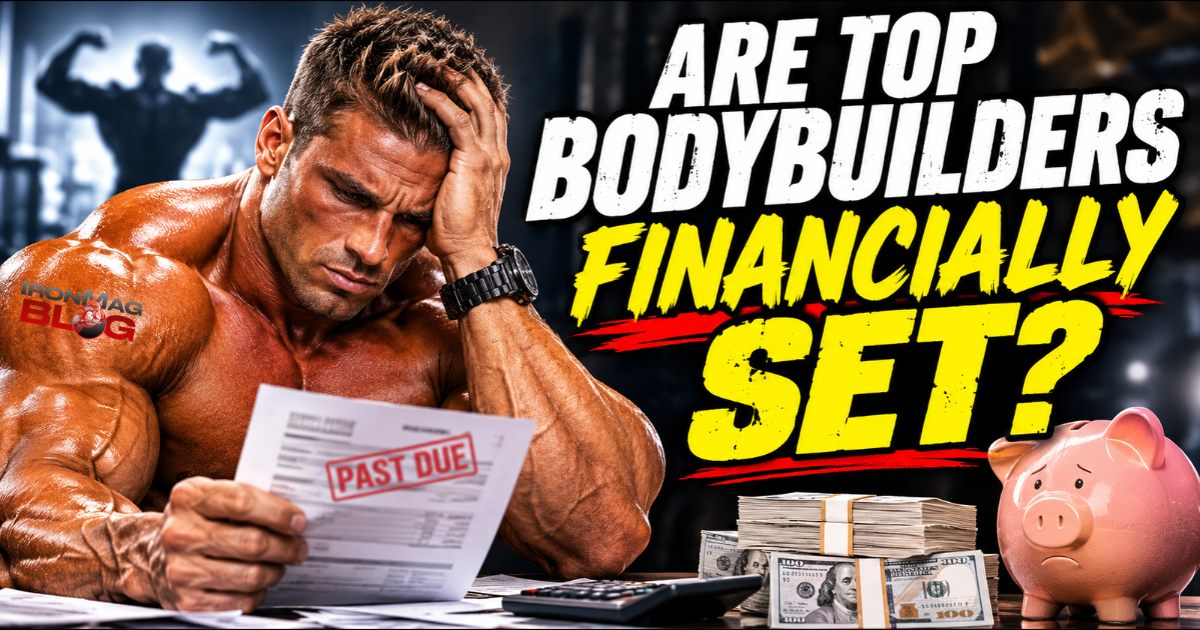
Top physique-based athletes seemingly will talk about anything. In 2026 you can ask them just about anything on their social media or even in person. You can ask them what drugs they take; you can ask them how they train, you can ask them what kind of lifestyles they lead. Right now, anything goes. Well pretty much anything goes. It used to be that asking a competitor if they took drugs and what drugs they took was a no-go. There’s even videos from back in the day when Ronnie Coleman seemed quite annoyed that somebody would ask him about his drug protocol. The audience also reacted negatively to the person asking the question and it almost seemed like that person was going to be asked to leave. But nowadays it’s a whole different world. Nowadays talking about steroids is just about as a matter of fact as talking about what flavor protein powder a competitor likes to enjoy. Politics are also open for discussion. It used to be that you couldn’t ask somebody what political affiliation they had or what candidate they voted for. It seems okay to do that as well. You can ask somebody if they have a pre-existing condition or if they have diabetes or if they have renal failure. All these things are okay to ask. You can ask just about anything. You can ask about the terms of a divorce or the final farewell of a loved one. But one of the things that you simply cannot ask about are financial matters. Most competitors will simply not answer. And there’s a reason for that. There’s a big reason for that and we’re going to talk about it in this article. I suspect a lot of people are going to read this story and choose not to respond publicly. They might respond in a DM or maybe a text message, but I highly doubt that some of the biggest names in the industry that should have an opinion simply will have a case of the cat catching their tongue.
Social media is supposed to be a vehicle to help followers, or fans if you will, get to know their favorite celebrities better. The idea is that what they present on their social media platforms is their life as unfiltered as possible. This is why the day in a life reels and videos and stories generate so many hits. Because essentially what it is a day in the life of a competitor, or of a movie star, or of a politician. You get to see a day in their life. You get to see them do chores, workout, maybe watch their favorite television program. But really, it’s kind of that fly on the wall vibe. And a lot of people really like that because they want to get to know their favorite star better. But where the dishonesty comes in is in terms of their financial solvency. A lot of competitors just like a lot of movie stars and celebrities of all walks of life do not want to present their true self on social media when it comes to how much money they have in the bank, how much they make, how much they spend and so on and so forth. Now listen, I’m one of the first people to tell you that you have to sort of draw a line in the sand regarding what you put out to the world. Everyone’s entitled to their privacy. Where I take exception is where people paint a false narrative and know that their fans and followers are living their lives according to the way they supposedly live theirs. That’s dishonest. But why would a competitor want to present a knowingly false glimpse into their lives?
Bodybuilding is an incredibly expensive sport. And by bodybuilding, I include all physique-based divisions. Whether you’re an amateur or you’re a professional, you should be financially set. If you’re going to do this sport, you should do it after all of the basic bills are paid. For example, if you are a novice competitor this article probably doesn’t apply to you, but if you’re a top-tier national level amateur or a professional, where you’re spending the vast majority of each day pursuing either a pro card or pro titles, you should have the basics covered. You should have your home, health insurance, your food, maybe a few bucks in the bank, before you start investing in steroids, contest fees, airline tickets and hotel rooms.
You would think that most competitors that call bodybuilding their profession would have this common sense and would employ it. But very few do. Many of the most successful competitors do not have a pot to piss in. And the reason for that is their passion for the sport outweighs everything else, including their sensibility to save for a rainy day. A lot of competitors have this invincibility complex where they will take everything but the kitchen sink without any concern for their body in the long run. They will run their credit cards into the negative, without any intention or even an idea of how to pay off that debt. They just compete in the hope that they’re going to start winning shows and in turn be able to pay back those debtors.
The mindset of physique-based competitors who are maxing out their credit cards and living inundated by debt is very similar to a gambler trying to win their money back at the blackjack tables. We know that only a very small minority of physique-based athletes can make enough money to make a living off the stage. Most competitors will subsidize their competitions with personal training or guest posing appearances and we all know some of the other dark web odd jobs they can do to make ends meet. What’s crazy is that the people that I’m talking about are the responsible ones. Even though they’re not working typical 9-to-5 jobs getting a W-2, they’re still trying to figure out a way to make a living even though they lead a very selfish lifestyle that has them traveling every weekend of the month to distant lands where they come back with more debt. But it’s the competitors that won’t even do the personal training or won’t do the odd jobs, but want to give 110% to competing and their pursuit of greatness that are the ones that are essentially couch surfing and living off of the occasional venmo or cash app from loyal fans. Haven’t you ever noticed that there are a lot of top competitors that put a cash app link on their Instagram bNobodybody that has their shit together would ever do that. But these are folks that are literally living day to day. They may not have enough money to pay the rent, but they never skip on their steroids.
And then what becomes dishonest is that you will see many of these nearly destitute bodybuilders with great physiques riding around in flashy sports cars, living in mansions, wearing expensive watches and eating at the finest restaurants. The truth of the matter is, they don’t own the houses, they don’t even live in them. That watch on their wrist, isn’t theirs. The restaurants they’re eating at – maybe somebody felt generous and invited them out that night. The reality of the matter is that they are fronting. They’re flexing and faking it till they make it, but essentially, they’re fronting. They don’t have anything, but they want their fans to believe they have everything. And that is the sham, that is the dishonesty that honestly offends me as a writer in the bodybuilding industry.
But then again, I can only get so upset. because a lot of the supplement game is smoke and mirrors also. You have outlandish claims that are not backed by science, with packaging that is more bling than substance, and so on and so forth. There is trickery at every level. But when it comes to the financial solvency of the top physique-based athletes, I don’t think that that should be groundbreaking news to anyone. It’s a well-known fact by those in the know that a lot of the biggest names in bodybuilding can’t cover their next rent payment, much less do they have a retirement in place. Because a point in time will come when they can no longer compete and then what? What’s a 40 or 50 year old former bodybuilder without a pro card going to do as a future careOr? or even if they have a pro card, what does a pro card mean anyways? Does a pro card open doors for you in corporate America? Is it going to land you a management job? A pro card isn’t going to do anything for you outside of bodybuilding and even in bodybuilding, what does it get you? Do you suddenly get a paycheck when you turn pro? Absolutely not. In fact, once you get a pro card you have to start paying dues as a pro and if you don’t pay those dues, then you lose your pro card. So, you don’t even get anything for being a pro, in fact – you have to pay more. So, being a pro doesn’t mean anything besides the personal pride that it gives the athlete or that sense of accomplishment that they’ve been chasing for so many years. And what do pro wins mean after the prize money is gone? It’s just another trophy, just another medal, but beyond the pride that it gives, it doesn’t buy a lot of hot dogs or pay to keep the lights on.
The idea of saving is not attractive to a lot of bodybuilders that want to seem like they are GQ. The idea of buying properties and managing those properties and dealing with nagging tenants that want their washer and dryer replaced or want their heater fixed. It’s not as glamorous as pretending to have a butler and complaining about how long the room service is taking. They don’t want to invest in property, they don’t want to work jobs, many of them probably don’t even pay taxes on their contest earnings. So, at the end of the day, what are they doing for their future? Not much – but they certainly won’t share that with the world.
I guess the point of this article isn’t to throw shade at bodybuilders that are struggling or just barely getting by, it’s more so as a wake-up call to fans and aspiring bodybuilders to not fall for the smoke and mirrors that a lot of their favorite competitors present as their lives on social media. It’s one of those things where it almost requires a warning label. Do not believe everything you hear, do not believe everything you see. Not only could it not be true, but you’re more than likely being conned by some of the biggest names in the sport. Maybe they need to present that alternate reality to rationalize why they’re spending so much of their time and money pursuing a dream that essentially is not going to do anything but leave them in the poor house. At the end of the day, I guess it’s okay if the competitors are single, unmarried, and don’t have children. But if you are talking about a competitor that is married, does have children, and does have other people that depend on them and they’re living this kind of life irresponsibly, then I would say that that is not only dishonest but extremely reckless and selfish. And we all know that bodybuilding is a very selfish sport, but in this context, selfishness would be a very undesirable thing to be.
But what say you? Do you think most top bodybuilders and physique-based stars are financially set? Why do you think they front so much on social media?
As always, I hope you enjoyed reading my article – here at IronMag. I look forward to reading your feedback in the comments. Please be sure to copy and paste a link to this article on all your social media feeds. It’s bound to generate lively conversation.
Author Bio:
Christian I. Duque is the owner of StrengthAddicts.com, a physique and strength website founded in 2008. He has worked for a number of bodybuilding websites, including RX Muscle and Muscular Development. Christian has written nearly 1,000 published articles for IronMag Blog, as well as articles for StrengthAddicts, RX Muscle, and others. By day, he is also a licensed attorney practicing in the areas of family law, immigration, and criminal defense.